History of the Tsechu: The origins of Buddhism in Bhutan
Every year, in the courtyards of the dzongs (fortress-monasteries) across Bhutan, the Tsechu is celebrated — a Buddhist festival that goes beyond religion to become a social, artistic and community event.
The word Tsechu translates as the tenth day of the lunar month in the Bhutanese calendar. It is one of Bhutan's most important and spectacular Buddhist religious festivals, commemorating the arrival of the saint Guru Rinpoche in Bhutan during the 8th century and his triumph over evil spirits, which introduced Buddhism to Bhutan.
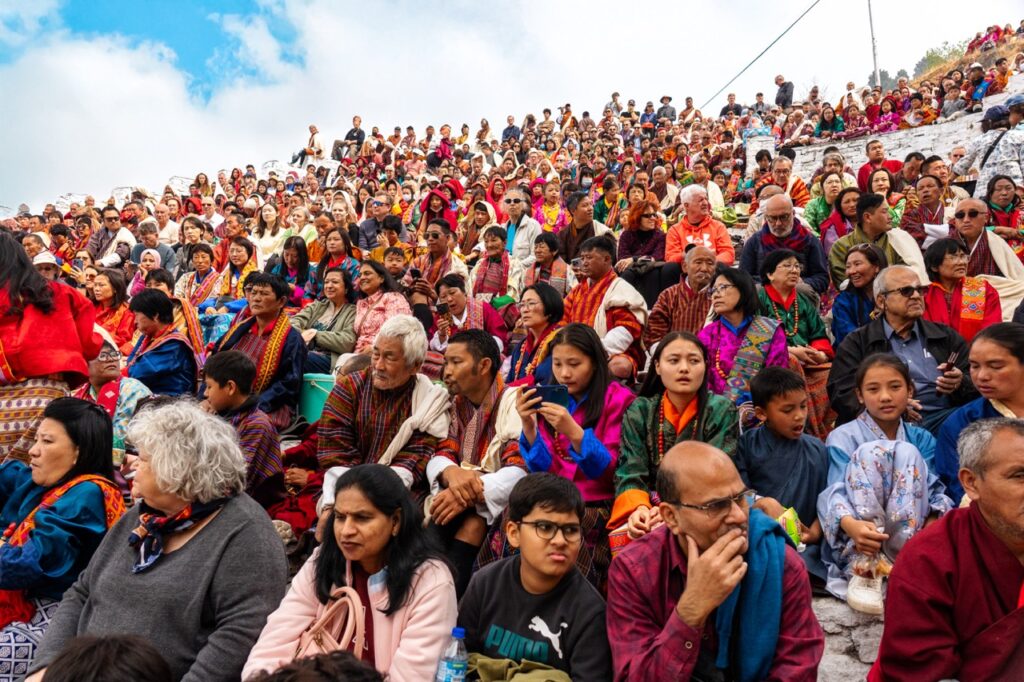
Since the 17th century, the Tsechu has been an annual public celebration in Bhutan, a time when thousands of families travel to different districts to take part in the most important festivity of the year. This event brings whole communities together, reuniting family and friends in a vibrant, colourful setting where traditional music and dance coexist with spirituality and religion in equal measure.
The Cham Dances: The meaning of the sacred masks
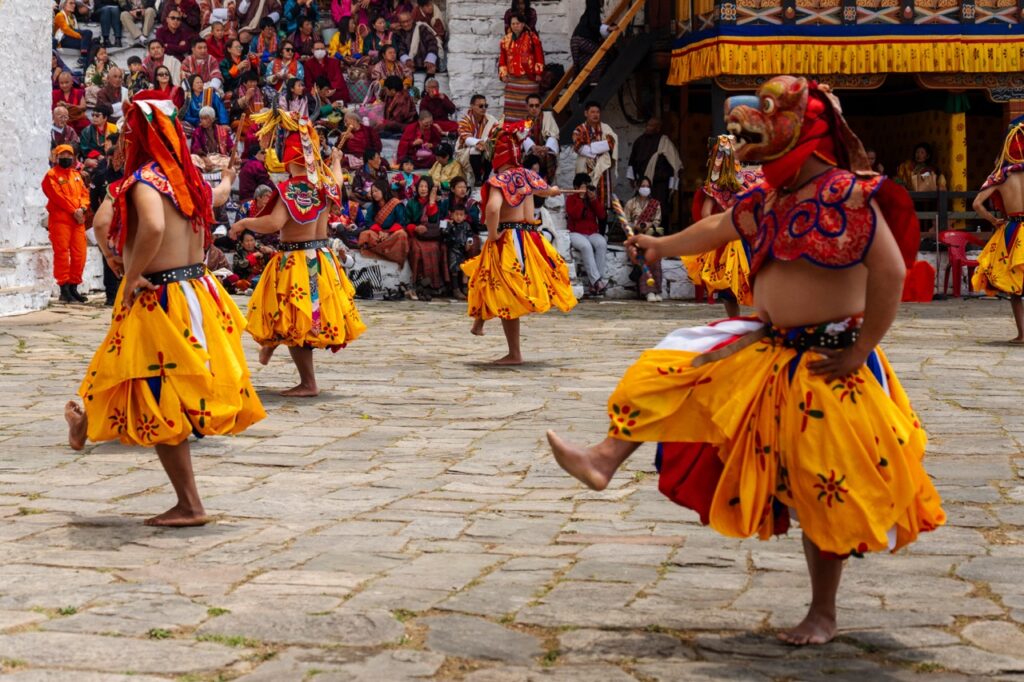
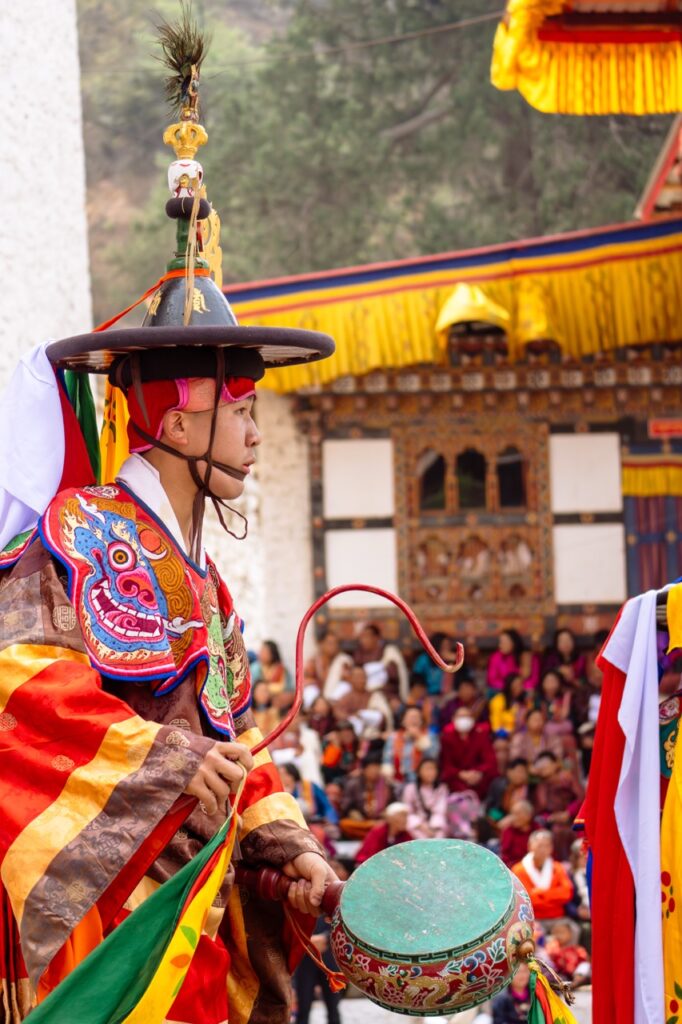
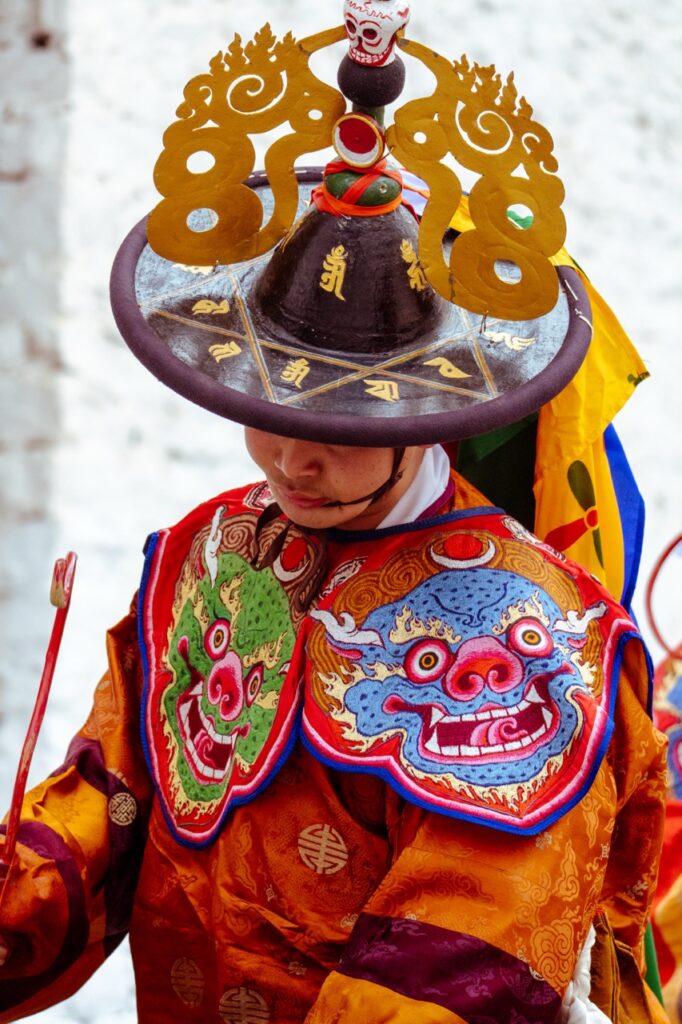
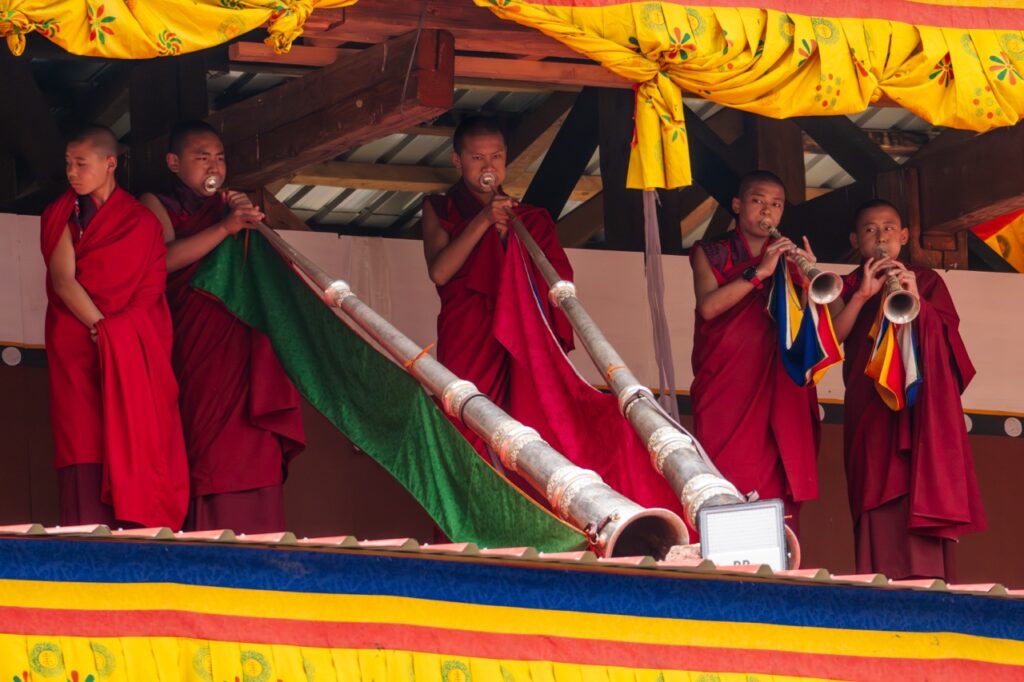
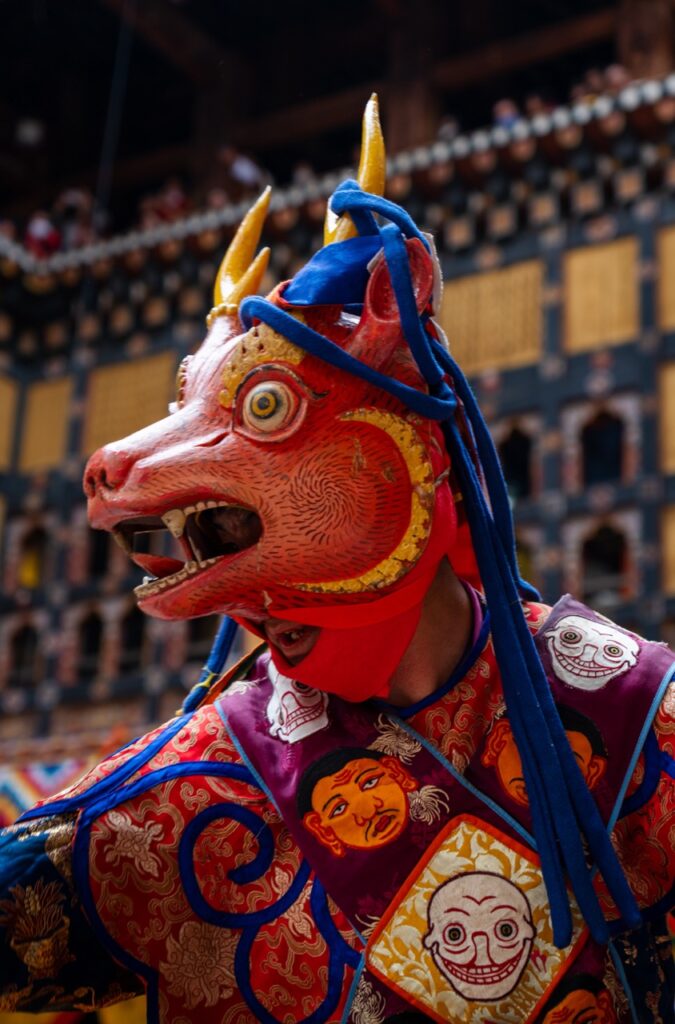
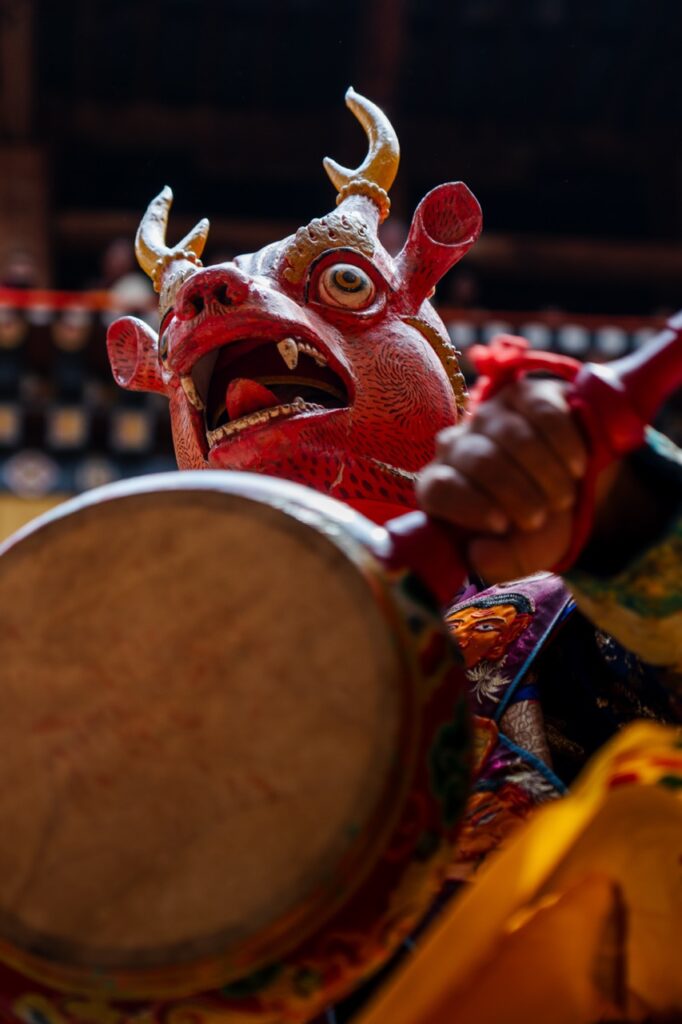
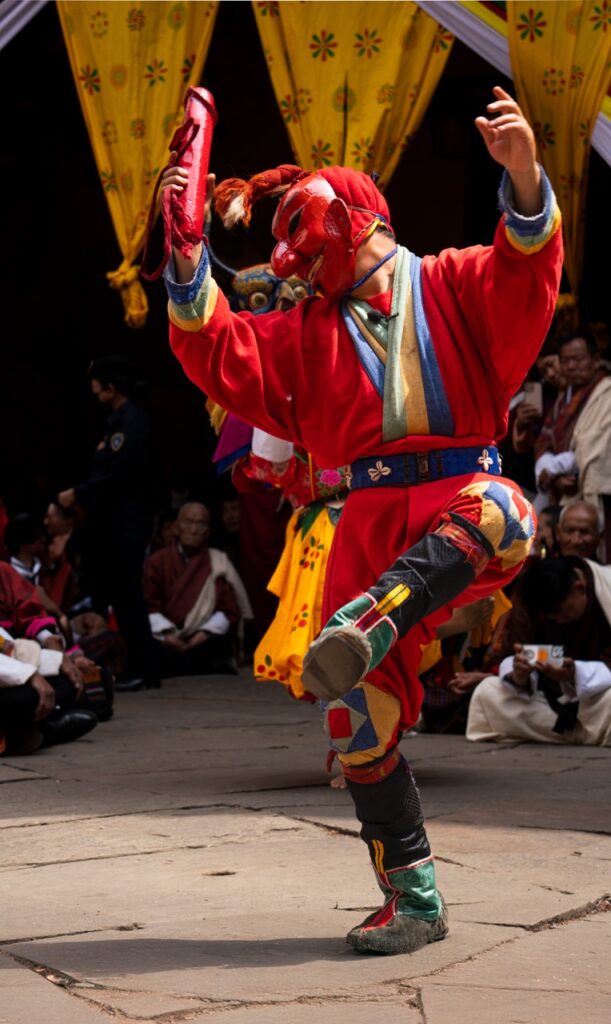
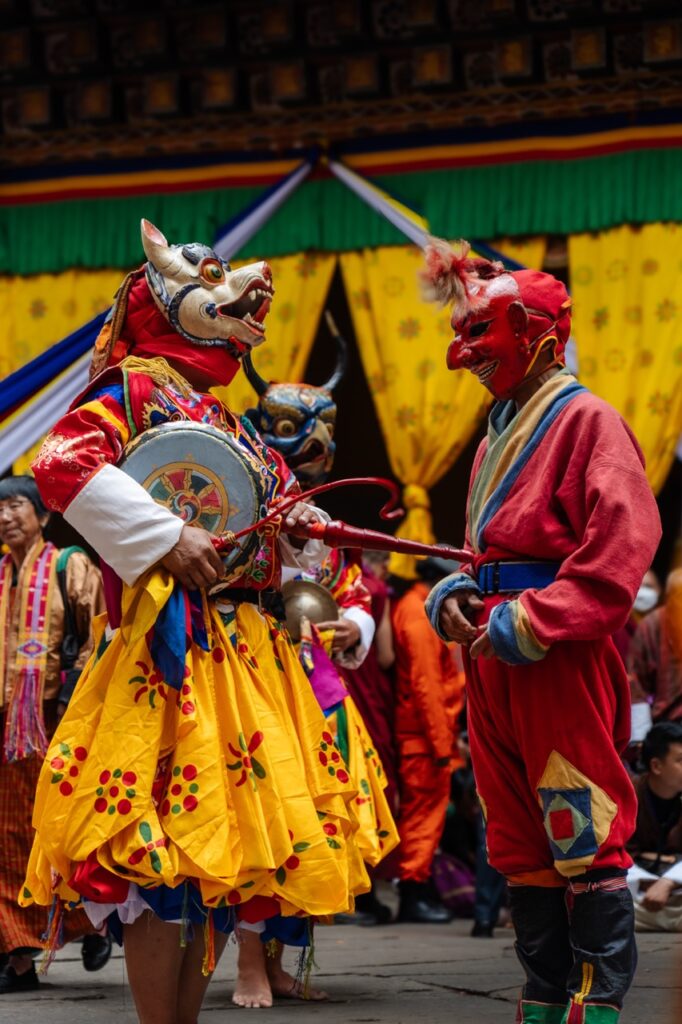
The mask dances, called Cham, are performed by monks and locals from the district wearing elaborate robes and masks that represent different deities, demons and historical figures. The performers spin, leap and advance to the rhythm of nga drums, conch shells and long trumpets, the dungchem. Through music and movement, the narrative of Bhutan's culture and religion is brought to life.
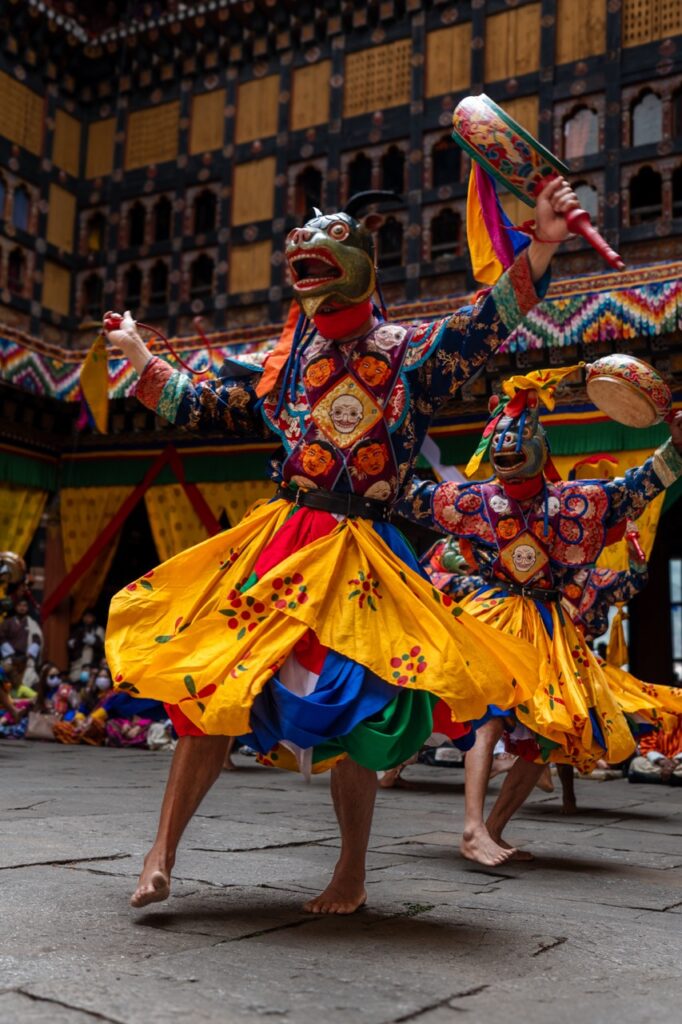
of moral judgement
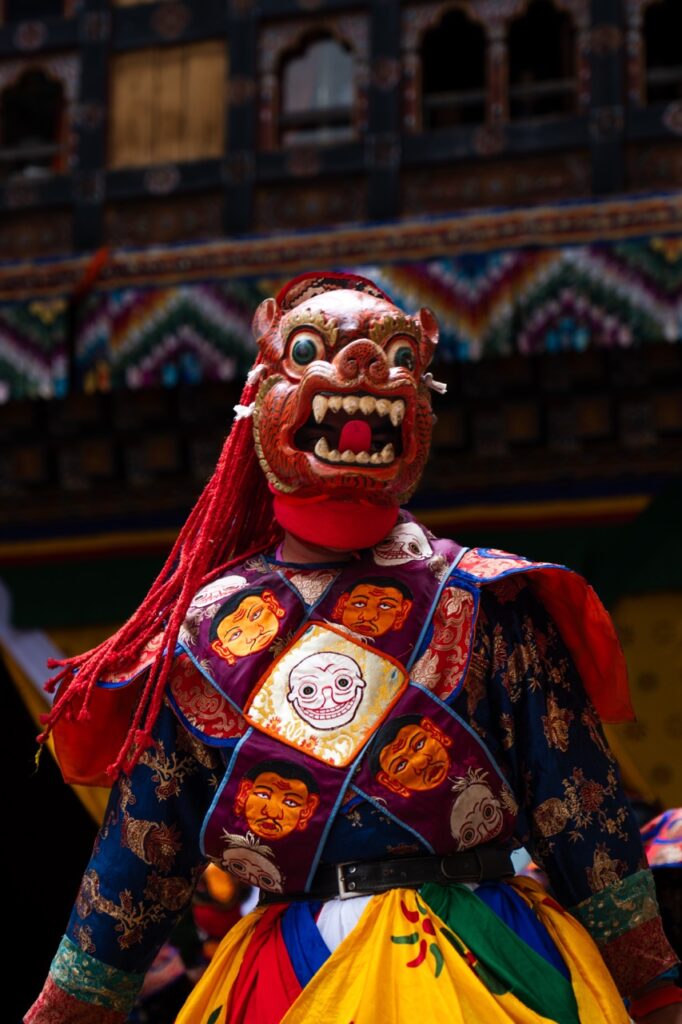
spiritual purification
These festivals generally last three or four days, and the dances take place in the courtyard of the dzong, an imposing fortress-monastery whose role has historically been dual, housing both religious institutions (temples) and administrative offices (regional government offices).
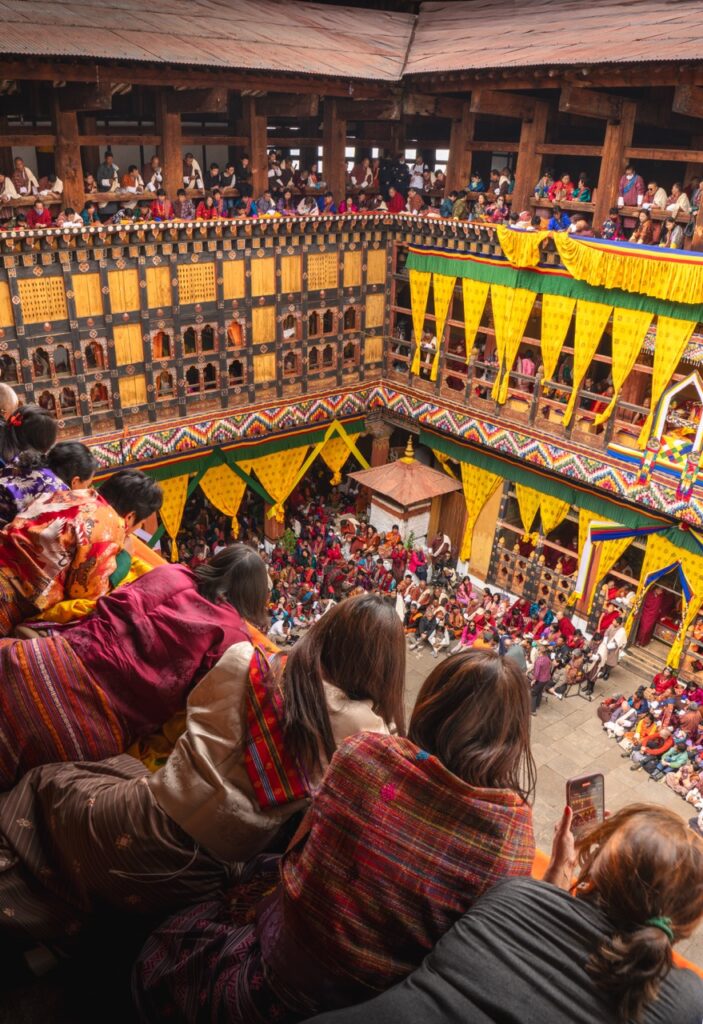
the balconies of Paro Dzong
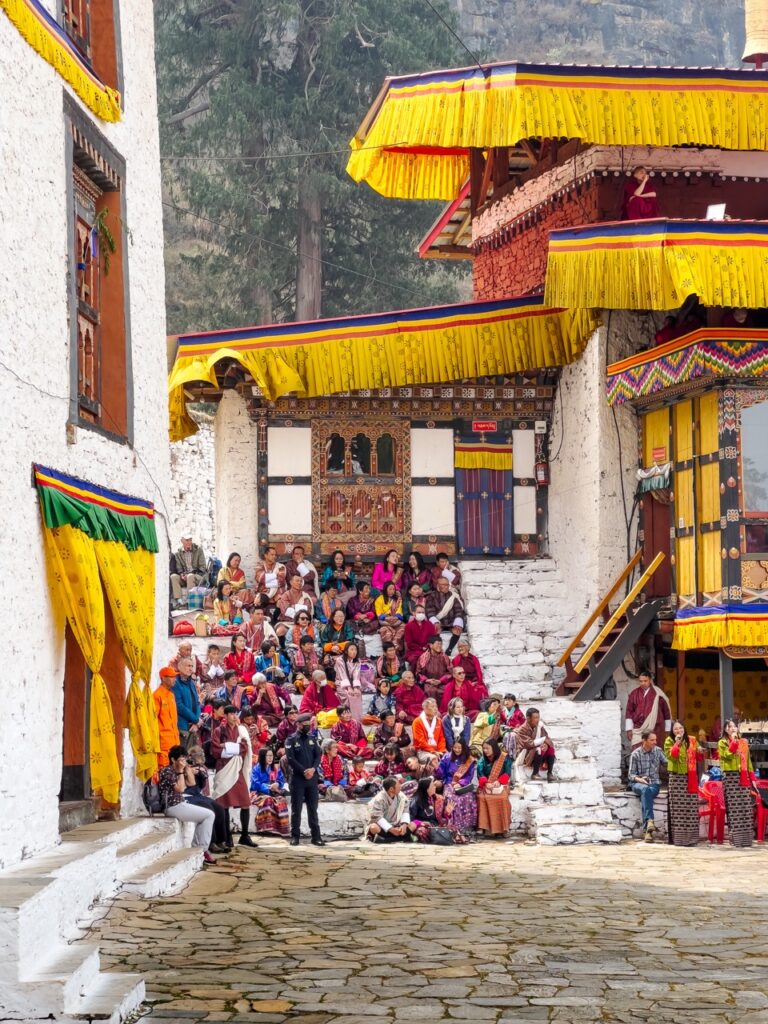
Paro Dzong
The cultural and spiritual importance of the Tsechu
For the dance performers, these festivals are hugely important, as they believe the dance offers an opportunity to purify the soul and earn spiritual merit. For the locals who attend, merit is earned simply by watching the dances or joining the final dance, which invites good luck and purifies the spirit.
Passed down over the years, this tradition is crucial to preserving Bhutan's cultural heritage across generations. One of its mask and drum dances, the Drametse Nga Cham, was proclaimed a Masterpiece of the Oral and Intangible Heritage of Humanity by UNESCO in 2005, in recognition of its cultural and spiritual significance.
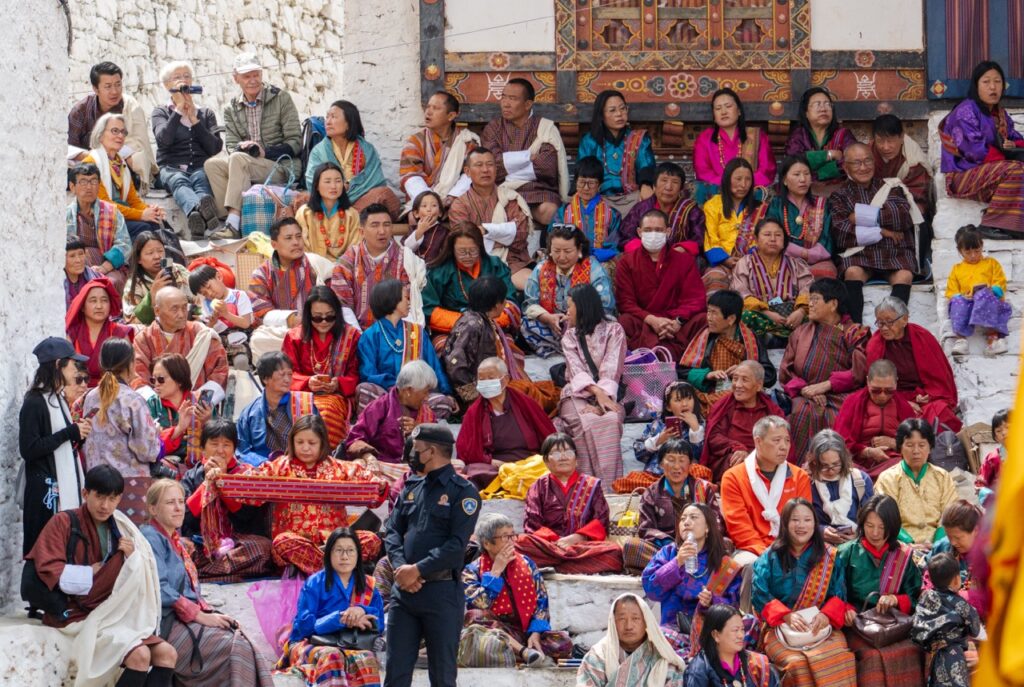
For the Bhutanese, family is an important pillar of their religion, and these festivals are the meeting point for hundreds of attendees who gather wearing their finest go and kira (Bhutan's traditional dress for men and women), prepare their best recipes, and form circles on the ground to share lunch, news and dances. These are important community gatherings where people come together to celebrate their culture and traditions.
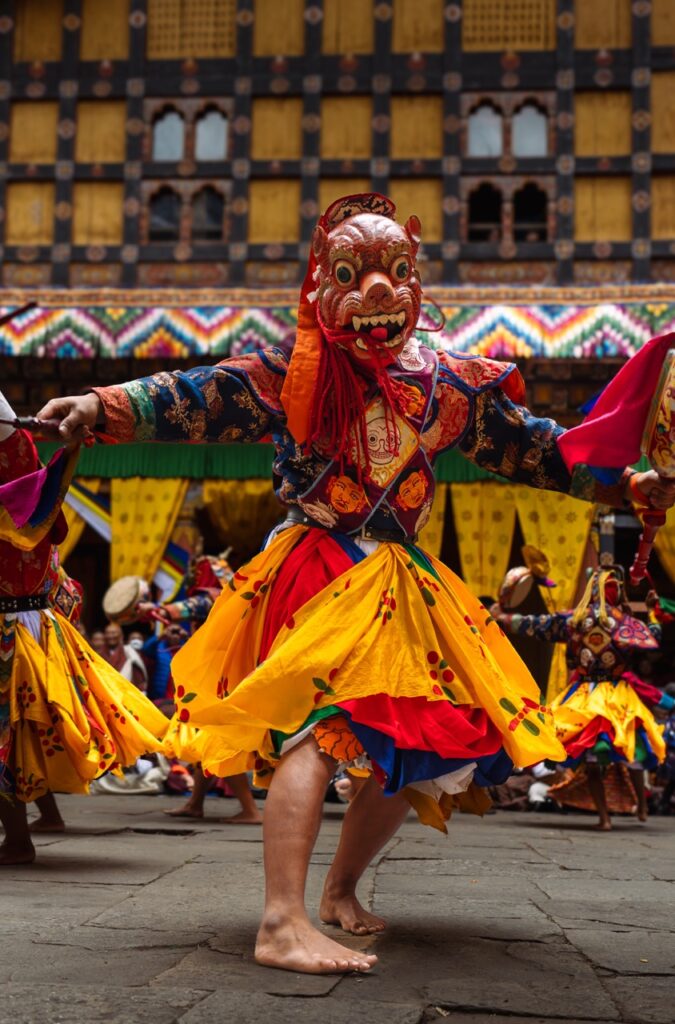
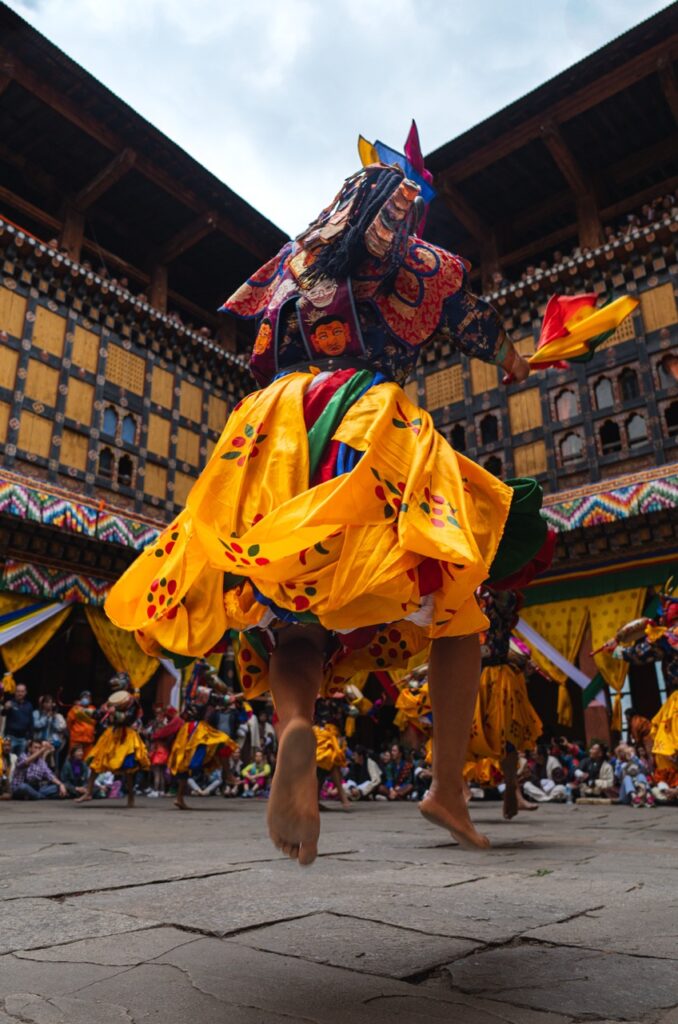
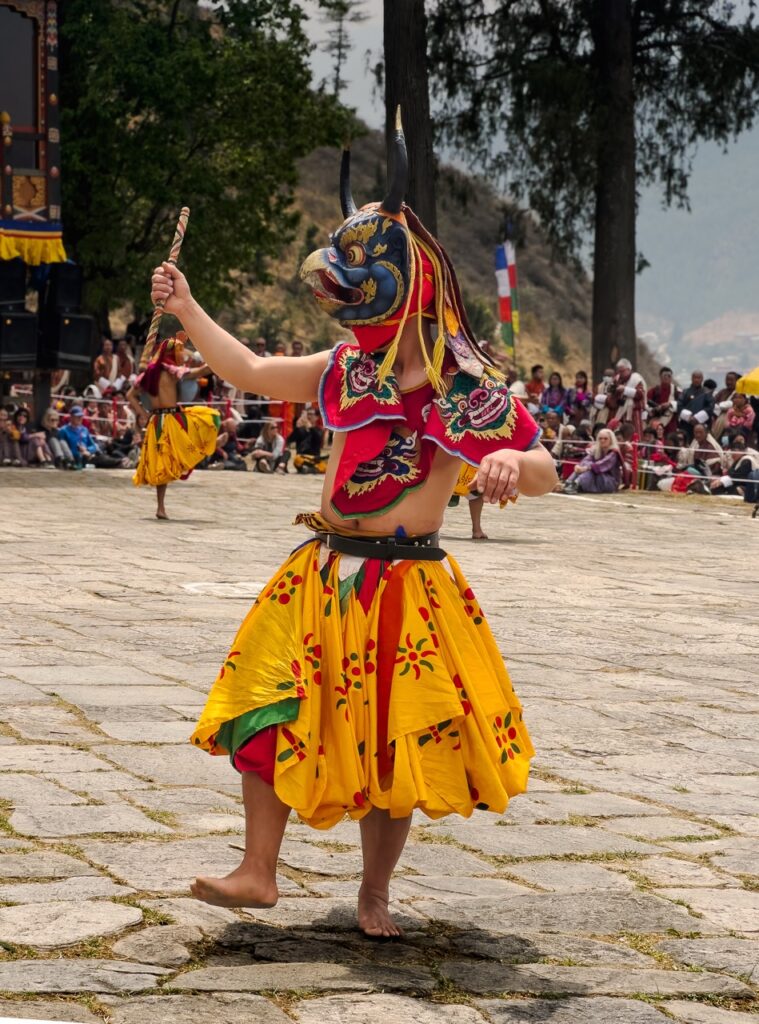
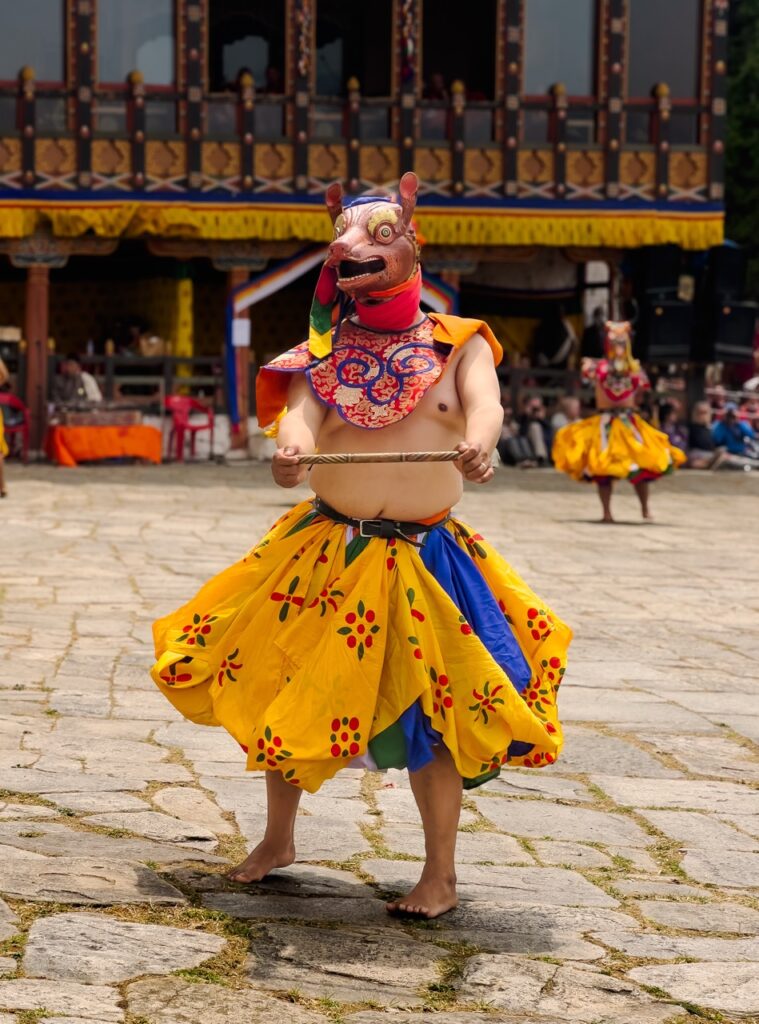
Drametse Nga Cham, a Masterpiece of the Oral and Intangible Heritage of Humanity recognised by UNESCO in 2005
The role of the Atsara: Much more than a jester
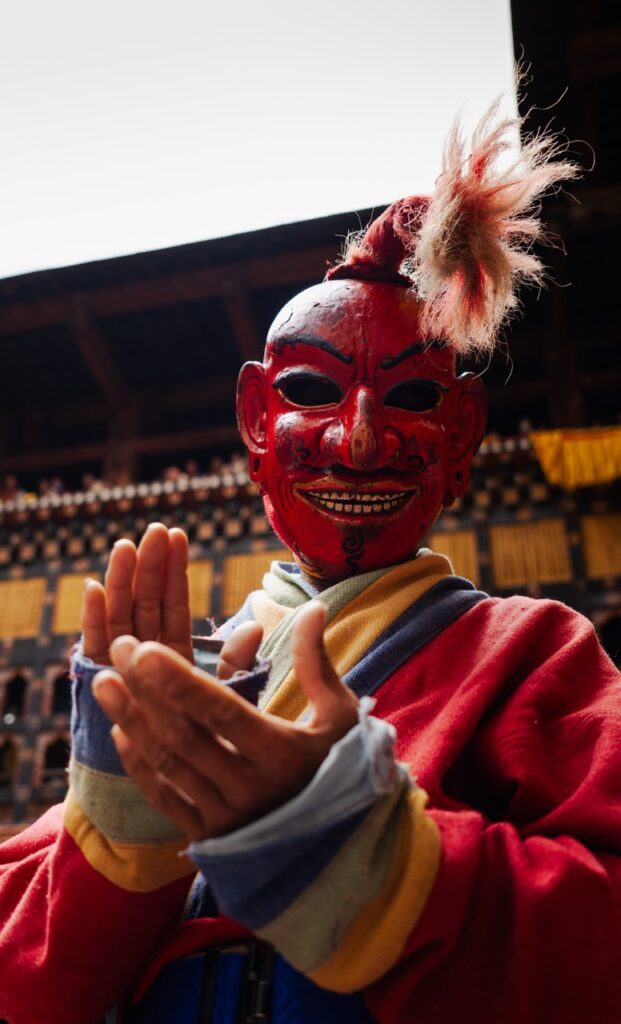
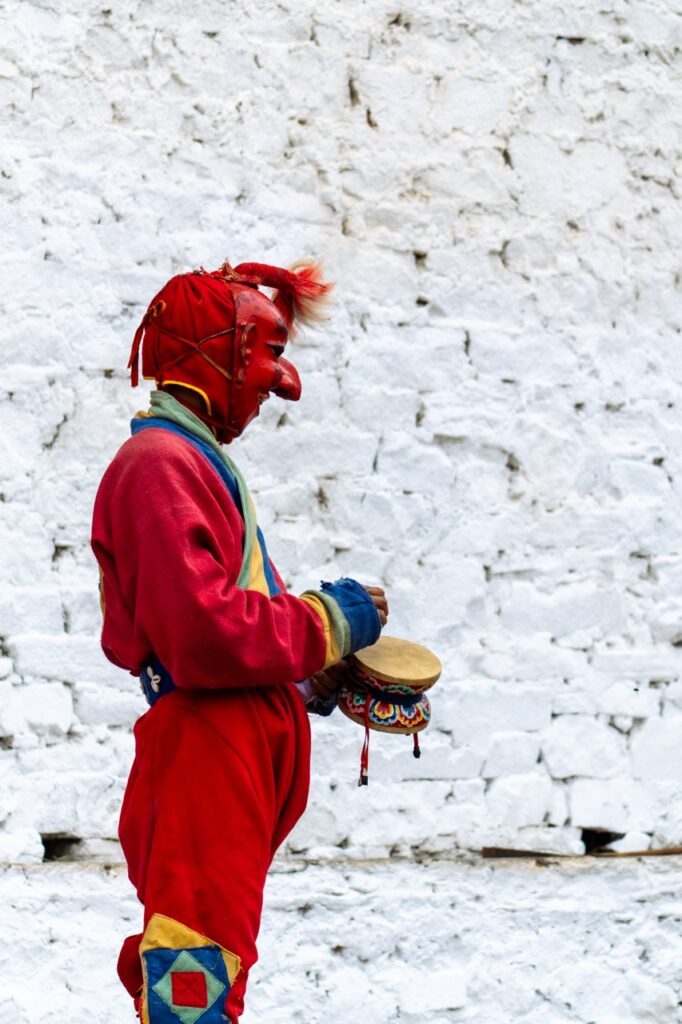
The atsara, a master or scholar, is deeply respected in Buddhism for his profound knowledge of Buddhist teachings, philosophy and practices. At the Tsechu, he is usually dressed in a red costume, and between dances he steps in to mimic the dancers and offer comic performances wearing a mask with a long phallic nose. His role is to entertain the spectators and keep order, watching over the harmony of the dances, adjusting robes and costumes, or preventing spectators from stepping onto the stage.
But his role goes far beyond being a simple jester. His figure is key to preserving and passing on Buddhist teachings, texts and practices to future generations. He acts as a spiritual guide on meditation, ethics and morality, leading rituals, ceremonies and prayers, and helping students overcome obstacles on their spiritual path, offering support and guiding others toward a full spiritual life. In Buddhist culture, the Atsara has reached the highest level of spiritual realisation and is qualified to guide others on the path toward enlightenment.
The two most important festivals are the one in Thimphu, the capital, in September, and the Paro Tsechu, in April — the district where all tourists land, since it is home to the country's international airport, considered one of the most dangerous in the world for being surrounded by the towering Himalayas.
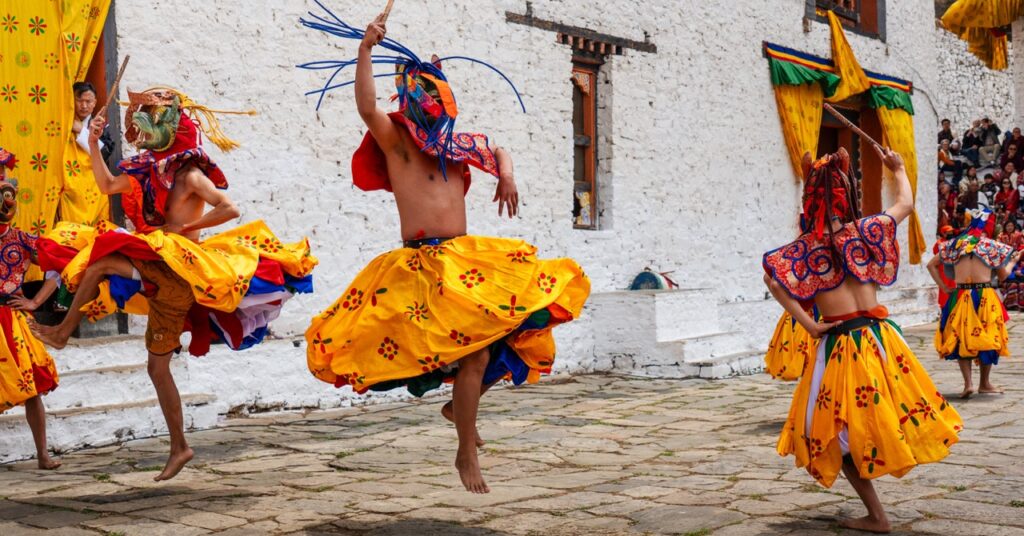
I was lucky enough to experience the Tsechu of Paro in April 2025, and I found it to be one of the most immersive and exciting experiences. The dances, the music, the smells, the masks, the costumes, and the festive, family atmosphere you feel in the dzong, surrounded by locals who make you feel like one of their own, is something not to be missed on a trip to Bhutan. Since most tourists will only visit Bhutan once in their lifetime, they should try to time their trip to coincide with one of the Tsechus, because the experience is unique and unforgettable.