
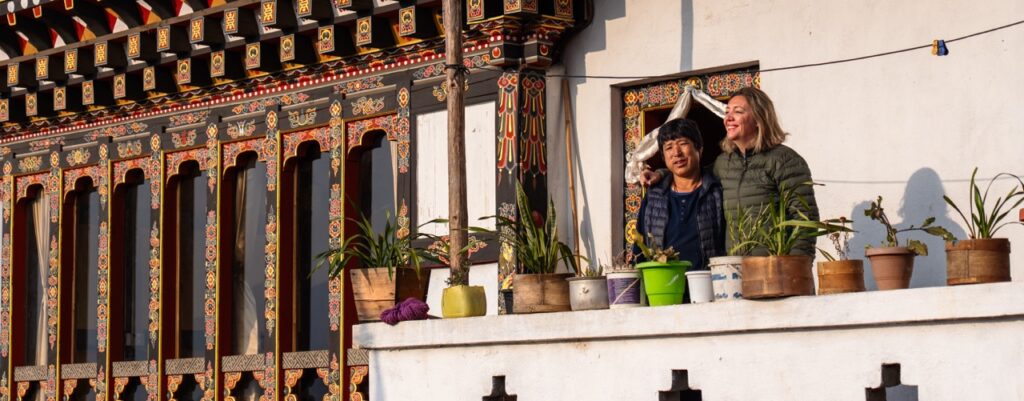
For centuries, Bhutan lived isolated from the rest of the world, protected by the Himalayan mountains and a strong will to preserve its cultural identity. It was in 1974, with the coronation of the fourth king, Jigme Singye Wangchuck, that the country decided to open up to tourism — but on its own terms.
Bhutan committed to a model based on the motto of “high value, low impact,” prioritising respect for its environment, its culture and its people.
The country's first hotel, the Hotel Motithang, was built in Thimphu specifically to host the first official visitors, in 1974. Since then, the country has gradually developed a network of accommodation, but always with clear limits — quality was favoured over quantity, experience over consumption.
The birth of the farmhouses
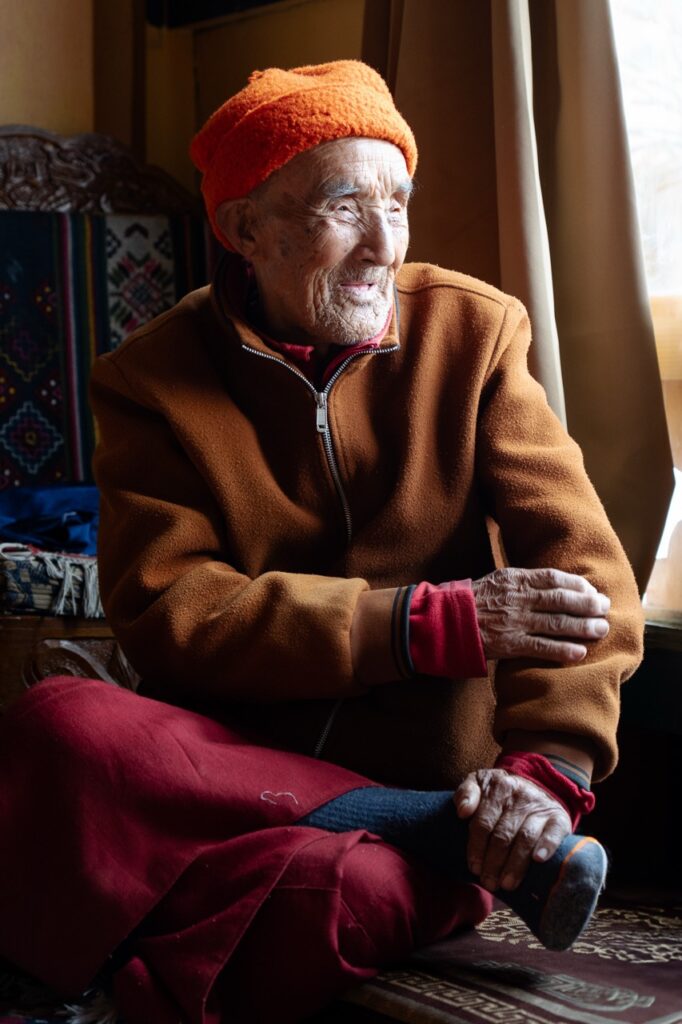
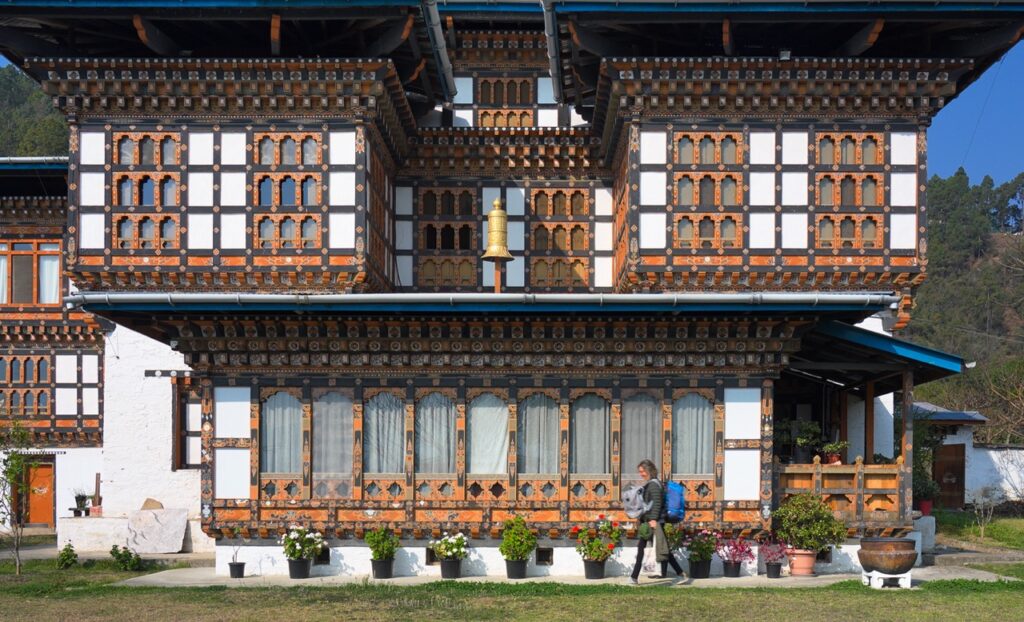
Thanks to growing interest in Bhutan's more authentic, rural side, many families began opening the doors of their traditional homes to curious travellers. This is how the farmhouses were born — rural houses, many over 100 years old, offering something no hotel could fully guarantee: togetherness, closeness, and a window into everyday Bhutanese life.
Over time, and especially from the 2000s onward, government approval of farmhouses kept growing, and today, according to the Paro Tourism Office, close to 140 accommodations of this kind were counted by the end of 2024, spread across Bhutan's main valleys. The government checks these properties every year to make sure they meet minimum health and comfort standards, so every year some farmhouses close while new ones that have obtained a permit open to host tourists.
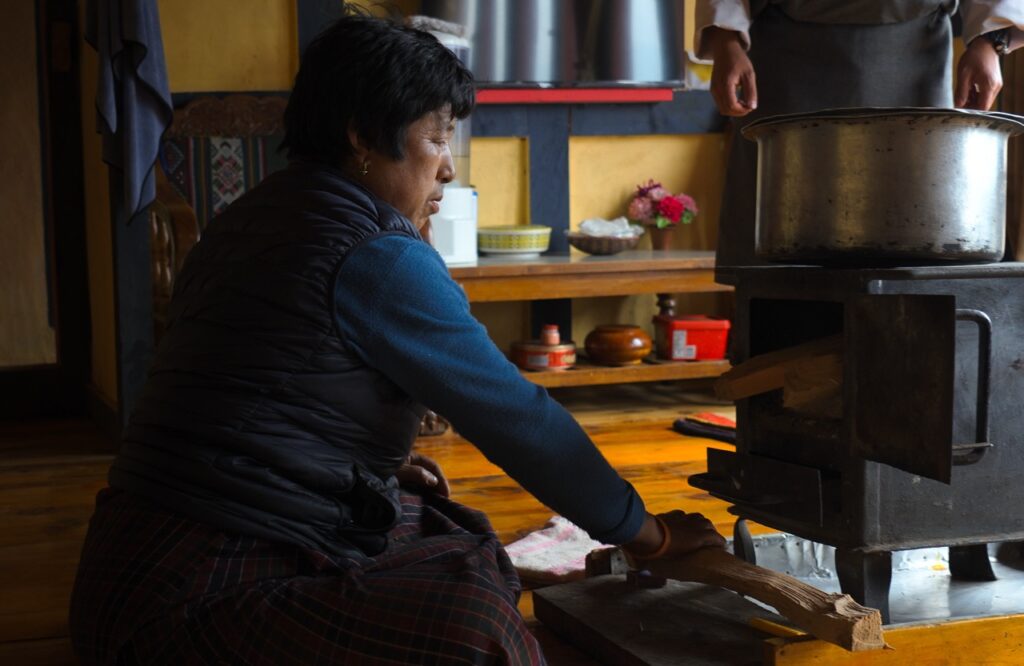
They aren't hotels, and they don't try to be. They're houses where the traveller is just another guest, not a customer. Where you get away from the noise, the rush, the notifications. Where you draw closer to something more essential, like sharing a conversation with the family's grandfather, who explains his view of the world through gestures and smiles. Where you enjoy the distinctive smell of salted butter tea warming slowly over the fire. Where you watch the hot stone bath being prepared, ready for you to enjoy after a half-day trek. Where you wander around the house, taking in your surroundings, listening to the birds, breathing in the nature around you.
Why choose a farmhouse?
Staying in a farmhouse means understanding that in Bhutan, luxury can simply mean being present. This model hasn't just generated income for local families — it has helped distribute the benefits of tourism more evenly and decentralise it, contributing significantly to reducing environmental impact.
If you're planning a trip to Bhutan and dreaming of something more than conventional hotels, sleeping in a traditional farmhouse can be one of the most special decisions on your route. This kind of accommodation lets you experience the country from the inside, share moments with a local family, and better understand the rhythm of Bhutanese life.
The farmhouses of Bhutan remind us that a journey isn't only about the destinations, but about the people who welcome us. That sometimes, the most valuable thing isn't what we see, but what we share. Because in Bhutan, sleeping under the wooden roof of a century-old traditional house can be the brightest part of the road.
I was lucky enough to stay in two farmhouses, and the experience of living with both families for three nights was unforgettable. It felt like visiting distant relatives after years of not seeing them. They welcomed me with their warmest smiles, made up my room with the best blankets, lit the stove a while before bedtime, kept the fire fed so warmth was never lacking, and fed and watered me while talking about life, customs, and the children who had gone far away to study.
After several hours of conversation, watching night fall through the living room windows, I noticed a television mounted on one of the walls. It must have been switched off for years.