
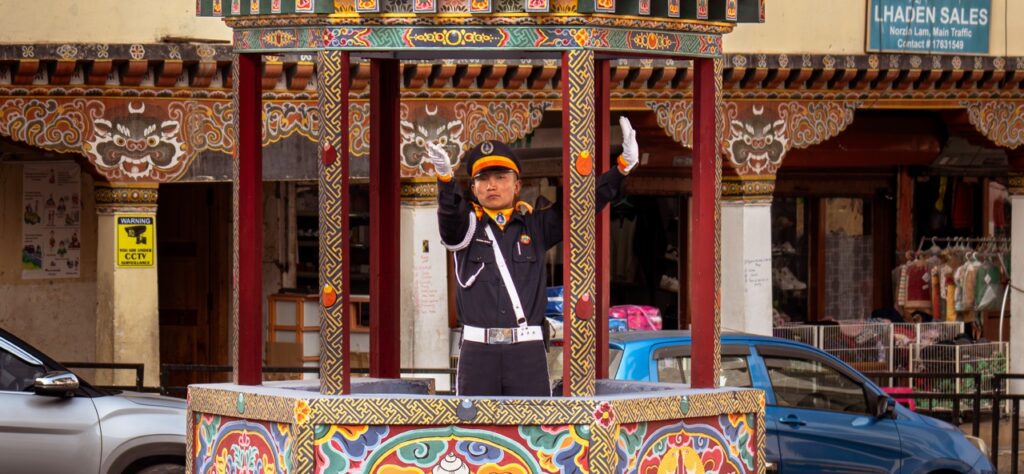
They say that Timbu, also known as Thimphu, is one of only two capital cities in the world with no traffic lights — the other being Ngerulmud, the capital of Palau. I suspect there may be another one tucked away on some Pacific island or even in Africa, but officially, as capitals go, there are only these two.
Bhutan's traffic men: an art in motion
Years ago, Thimphu tried installing a traffic light, but locals felt it was too impersonal, so the famous white-gloved police officers went back to directing traffic with their characteristic elegance. Over the years, these officers have gradually been replaced by small roundabouts at each intersection, decorated with Buddhist motifs carved into brightly coloured wood.
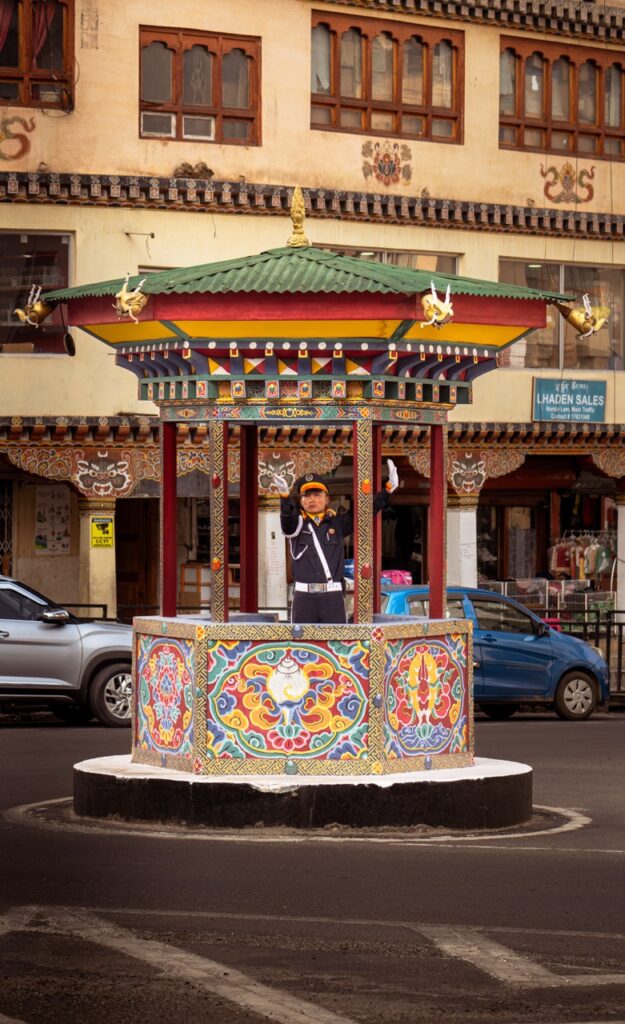
Now only a handful of officers remain, directing traffic at a few intersections. There are usually two officers in the decorative booths — one directs the traffic while the other watches over pedestrians or takes over when the first one gets tired.
In Thimphu, one of the capital's biggest tourist draws is a roundabout where several streets meet, with a small traditional wooden booth at its centre, painted in vivid colours, where the show put on by the officer directing traffic is a sight worth applauding.
They wear an immaculate uniform — a military-style cap, a blue coat, and white gloves so their hand movements stand out clearly. Their arms move smoothly, like someone performing an '80s dance, alternating directions to guide the flow of vehicles. When I saw them, they strongly reminded me of Madonna in her Vogue music video. That harmony, that precision, those gloves perfectly aligned with the rest of the body, so elegant. It looked more like a musical choreography than a policeman directing traffic. A true work of art in motion.
Modernity and tradition in balance
After spending a few minutes watching the capital's most famous traffic man, you can stroll around the clock tower square, walk past the archery field, take photos at the memorial chorten, and finish by walking down the main street, Norzin Lam, to browse its souvenir shops, where you can buy anything from a traditional Bhutanese outfit to trendy Korean sheet masks for less than a euro.
The most modern cafés sit alongside restaurants serving the most exquisite momos (dumplings), and at the only rooftop bars you'll find anywhere in the country, you can enjoy a Red Panda beer made with red rice, or sample any of their imported drinks.
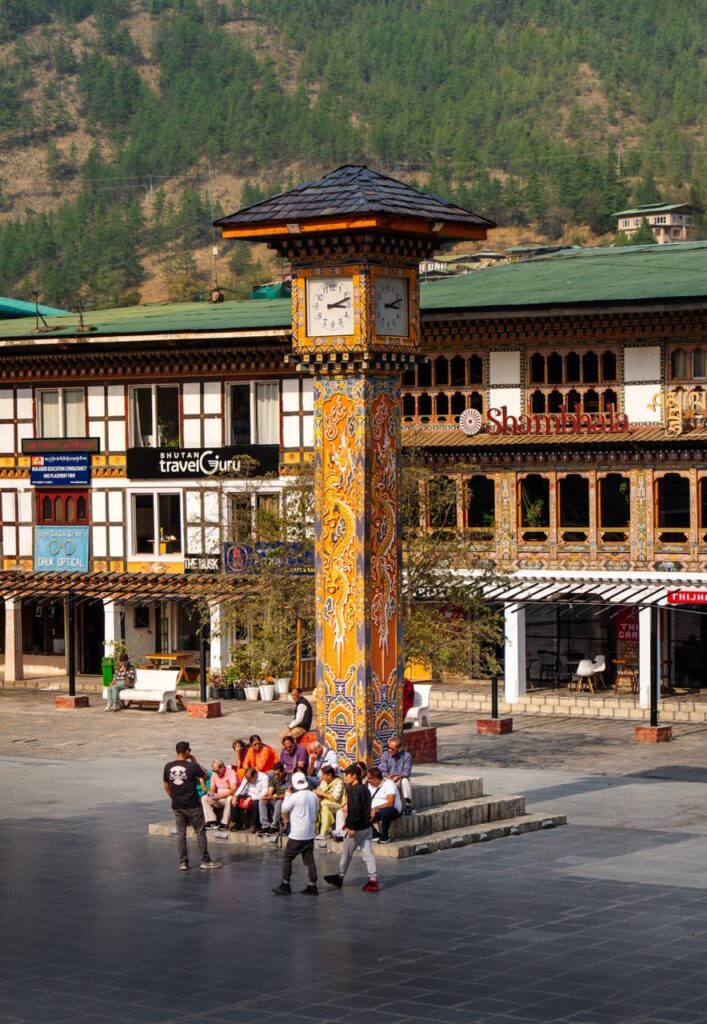
Bhutan's capital has the most balanced mix of modernity and tradition I have ever seen. I just hope the former doesn't end up overtaking the latter, because traffic has been noticeably increasing over the past couple of years, according to my driver during the trip, and perhaps those officers will end up so exhausted from directing traffic that the dreaded traffic light they once removed will have to go back up — because the quality and authenticity of the traffic men, as they're called there, is simply incomparable to any traffic light.
Bhutan is a country known for living in harmony with nature and striving to preserve its traditions, despite its gradual opening to tourism.
Keeping the traffic men is not a quirk — it's a conscious, courageous choice. Each of their gestures, almost a small urban ritual, doesn't just regulate traffic; it fosters a city that is more mindful, respectful, and aligned with its cultural identity. Replacing them with traffic lights would mean swapping a point of human connection for a signal — a symbol of progress, but also of coldness. In Thimphu, they chose the opposite: more humanity at every crossing.