
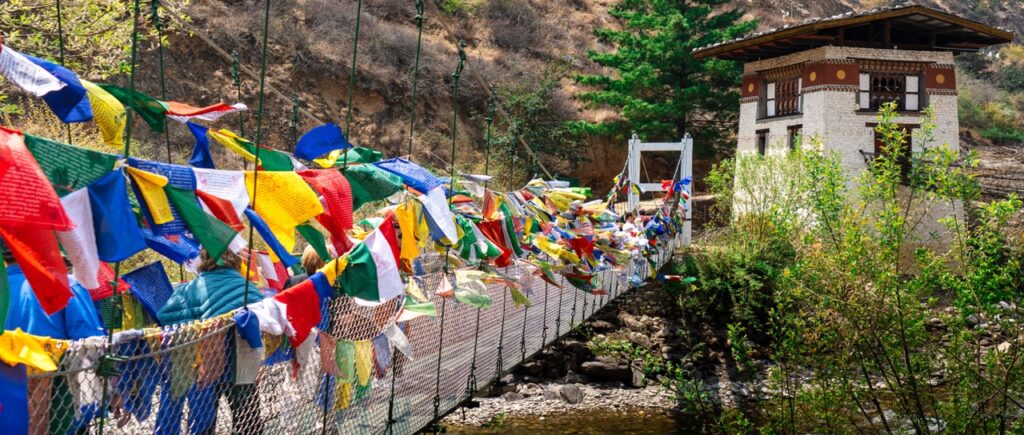
Prayer flags are a vibrant and meaningful element of Buddhist tradition, particularly the Tibetan Buddhism that Bhutan inherited. They are rectangular pieces of colored cloth, usually hung along mountain passes, temples, monasteries and private homes. They flutter in the wind, carrying prayers and blessings written on the fabric.
These flags are deeply symbolic and serve as a powerful tool for spreading compassion, peace and goodwill.
Origins and history
The tradition of prayer flags predates Buddhism. They're believed to have originated in the ancient Bön religion, Tibet's pre-Buddhist shamanic religion, between the 8th and 11th centuries. In that tradition, pieces of pure-colored cloth were used in healing ceremonies and to seek protection from the natural elements (wind, fire, water and earth), and travelers generally carried them for protection.
When Buddhism spread to Tibet, the practice was adapted and integrated into its rituals, and the colored cloths took on the modern form of flags printed with sutras (sacred texts containing fragments of the Buddha's teachings) and mantras.
Design and symbolism of the flags
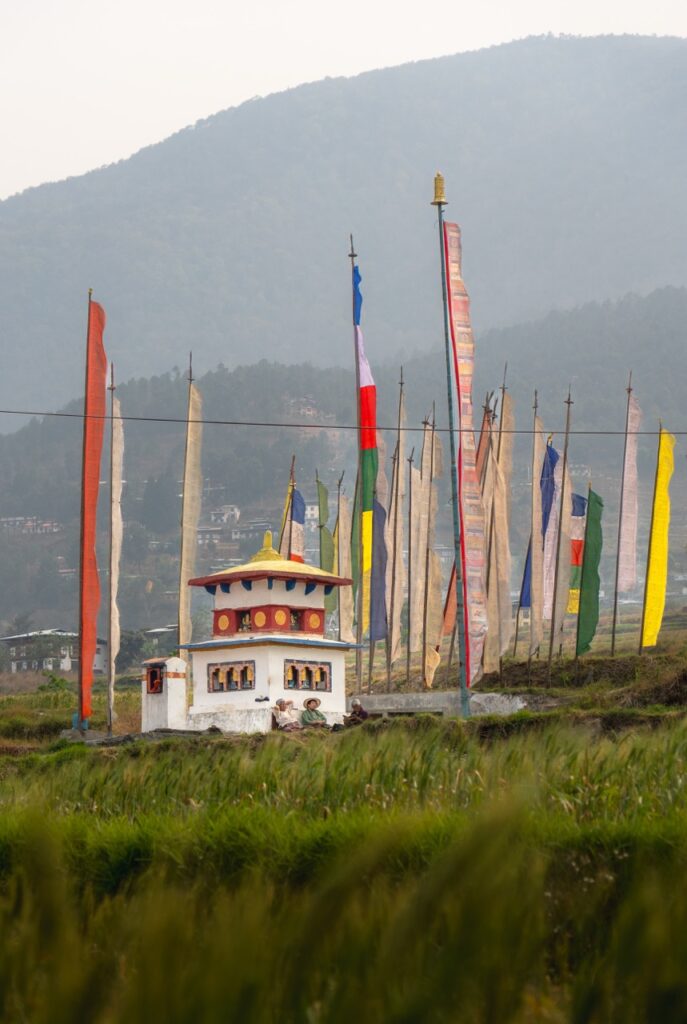
Prayer flags are usually always arranged in an orderly, deliberate way, from left to right, in sets of five colors that each symbolize one element, and their harmonious arrangement reflects the balance of all the elements in the universe.
- Blue: symbolizes the sky and space.
- White: represents air and wind.
- Red: signifies fire.
- Green: represents water.
- Yellow: linked to the earth.
Besides their colors and the texts written on them (mantras and sutras), some flags also carry images of deities and animals. The horse symbolizes good fortune and vitality, and there are also the four deities, as locals call them: the tiger, the snow lion, the garuda (a mythical bird) and the dragon, which symbolize power and courage.
Flags can be horizontal, the most common kind, usually strung along bridges, around temples or at homes, or vertical, mounted on poles, much larger and considerably taller, placed at mountain passes, temple entrances, monasteries and sacred spaces. These vertical ones are placed in high, open spots where the wind blows strongest, carrying their blessings further. Placing them on the ground, or even stepping on them, is considered disrespectful.
The most common mantra found on the flags is "Om Mani Padme Hum", whose meaning goes beyond its literal translation of "The Jewel in the Lotus" — it holds that through compassion and wisdom, anyone can attain bodily and spiritual purity, just as the Buddha did.
Purpose and function
Bhutan's prayer flags aren't merely decorative — their main purpose is to promote peace, compassion, strength and wisdom. When the wind blows through the flags, it's believed to activate the prayers and mantras printed on them, carrying their blessings to all living beings. This practice perfectly reflects the Buddhist ideal of benefiting others and cultivating positive energy in the world around us, since far from being written for personal benefit, these prayers are truly made for the wellbeing of everyone else. They serve as a reminder of how interconnected all elements of life are, and of the importance of being compassionate with one another.
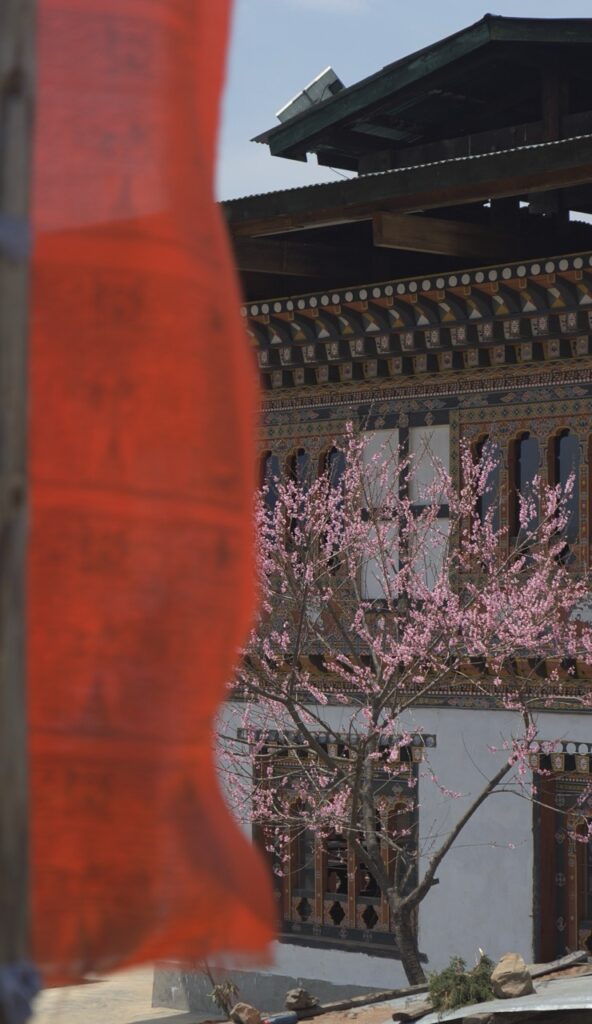
Arriving in Bhutan and encountering, for the first time, those sacred valleys dotted with prayer flags is an experience that goes beyond the scenery — it's a deep immersion into the spiritual silence of the Himalayas. Every row of flags seems to suspend a prayer for peace in the air, an implicit wish for wellbeing that stretches across the valleys.
On every braided string of five colors, the air carries wishes for peace, compassion and wisdom. You feel that every flag tells a story, that every gust redistributes blessings, and that those hills don't just hold stones, but whispers of harmony and peace. That feeling is perhaps what makes Bhutan not just a destination, but a place where the inner journey begins without you even realizing it.
The curious thing about this ancestral practice, as our guide Dendup told us, is that anyone can put up prayer flags wherever they see fit, always respecting harmony with the colors and the surroundings. Along a bend in the road, halfway up a mountain, at the entrance to a temple, in the capital's main square, or at the entrance to farmhouses. Wherever you go, there are always flags fluttering in the wind, a reminder that blessings and solidarity when writing prayers make Bhutan a unique country — one generous enough to share this tradition with tourists and let you choose a spot of your own, between one valley and the next, to put up your prayer flags. All you need to do is check with your guide about where you can place them, buy them, and go to the spot, always following the rules of respect for the surroundings, and leave your mark on the country of the dragon, fluttering in the wind.
I have my own prayer flags at home, a gift alongside the Khata, the welcome scarf they give you at the airport, from our travel agency. Now I just need to find them a good spot, where the air current can work its magic. I think I've just thought of the perfect place. I'm going to hang them up.